Toolkit · In use
Indaba
Monitoring and evaluation makes communities report upward, in formats and languages set by funders.
- 192IFRC national societies
- 15+countries
- <US$1,000per field kit
- Where
- Indonesia, Namibia, Egypt, Bangladesh, Colombia, Honduras, El Salvador, Panama, Ukraine
- With
- IFRC, Indonesian Red Cross, Namibian Red Cross
- By
- Open Lab, Newcastle University
- Period
- 2017–present
- Link
- indaba.dev
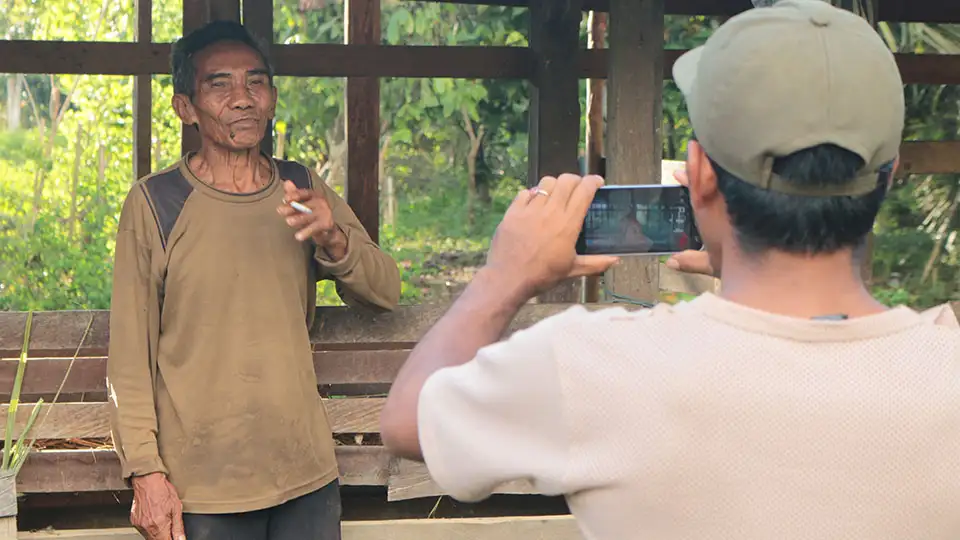
Indaba is a participatory video process in which communities shoot, edit and publish their own monitoring and evaluation footage on Android smartphones. Between 2017 and 2019 it was used for a water and sanitation project in Berau, Indonesia; an HIV/AIDS programme evaluation in Grootfontein, Namibia; a baseline with the Deaf community in Cairo, Egypt; programme planning in Bangladesh; and Zika response monitoring in Colombia and Honduras. The guide is published under a Creative Commons Attribution 4.0 licence in English, Spanish, Arabic and French.
The IFRC has since adopted Indaba as a standard method across its 192 national societies and trains its own staff to facilitate it, replacing external consultants and specialist media teams. A full kit, including multiple smartphones, costs under US$1,000, where conventional participatory video deployments cost tens of thousands. Red Cross teams used it in 2022 to record the stories of Ukrainian refugees.